
Eclat by NRJ
New
Dandruff or Dry Scalp? How to Tell the Difference in Winter
By Eclat Team · 26 November 2026
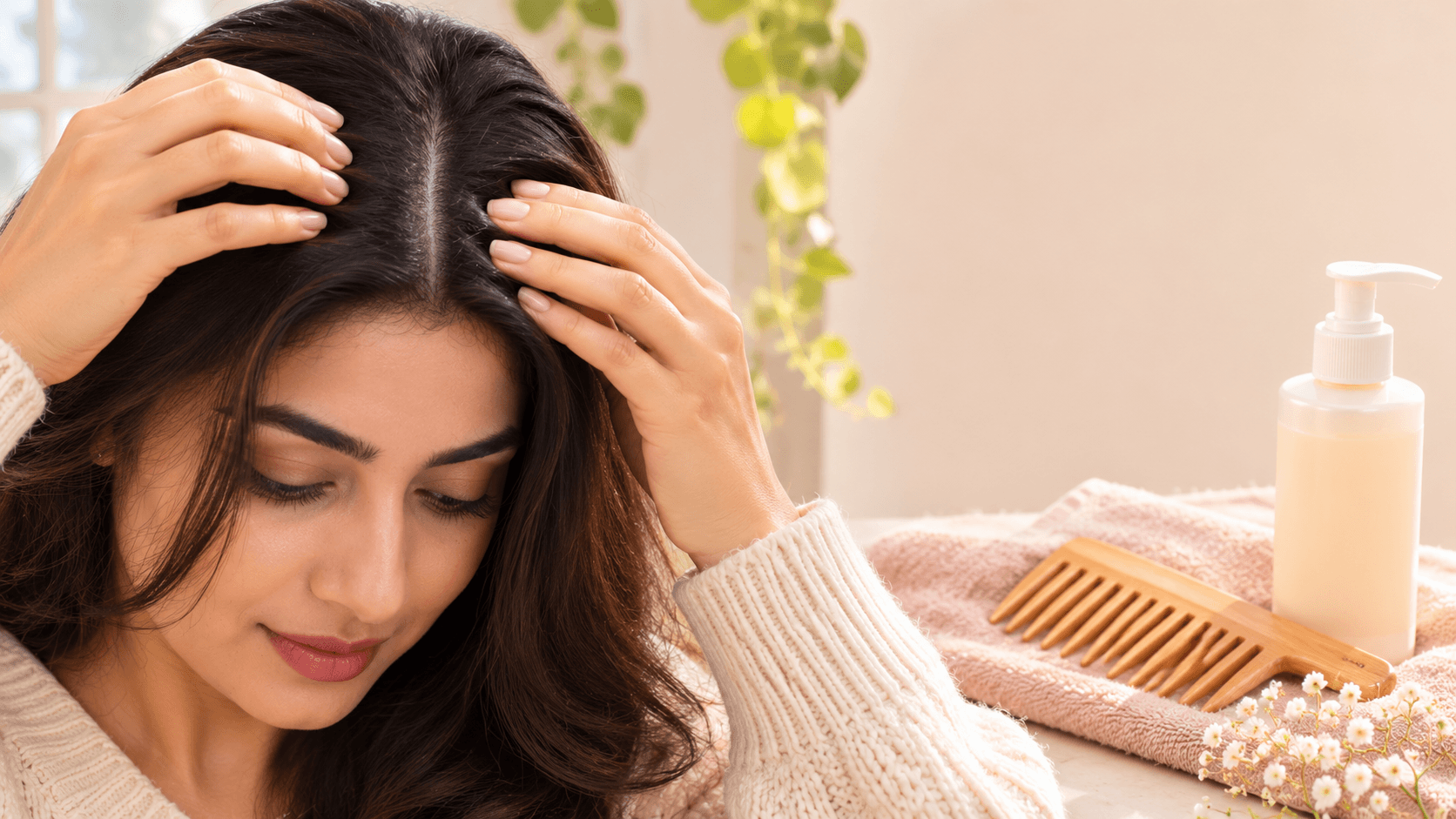
Quick answer: Dandruff flakes are larger, white or yellowish and slightly greasy, and usually come with an oily, itchy scalp. Dry-scalp flakes are small, white and powdery, and come with tightness and dry skin elsewhere on your body. Dandruff is linked to a scalp yeast called Malassezia and needs an anti-dandruff ingredient; dry scalp needs moisture and gentler washing.
Dandruff vs Dry Scalp at a Glance
| Dandruff | Dry scalp |
Flakes | Larger, white or yellowish, oily-looking | Small, white, dry and powdery |
Scalp feel | Oily, sometimes red or irritated | Tight and dry |
Itch | Common, can be persistent | Common, worse after washing with hot water |
Rest of your skin | Often oily, especially face | Often dry — face, hands, legs |
Main cause | Overgrowth of Malassezia yeast, oil, sensitivity | Low humidity, hot water, harsh shampoos |
What helps | Anti-dandruff active ingredients | Moisture, gentler cleansing, lukewarm water |
Why Winter Makes Both Worse
Cold, dry air and hot showers pull moisture from the scalp, which causes or worsens dry scalp. At the same time, many people wash their hair less in winter, which lets oil and yeast build up — the conditions dandruff thrives in. It’s possible to have both at once, which is why the wrong treatment sometimes makes flakes worse.
How to Treat Dandruff
Use a shampoo containing one of these anti-dandruff ingredients:
• Zinc pyrithione — a common, gentle starting point for regular use
• Selenium sulfide — reduces yeast and flaking
• Ketoconazole — an antifungal, often recommended for stubborn dandruff
• Salicylic acid — loosens and lifts flakes
Massage the shampoo into the scalp and leave it for 3–5 minutes before rinsing, so the active ingredient has time to work. Use it 2–3 times a week until flakes settle, then once a week to maintain. If one ingredient stops working, switching to another often helps.
Eclat tip: Heavy oiling can make dandruff worse for some people, because Malassezia feeds on scalp oils. If you have dandruff, keep oils to your lengths rather than massaging them into your scalp.
How to Treat Dry Scalp
• Turn down the water temperature. Lukewarm water is far less drying than hot.
• Switch to a gentle shampoo. A sulfate-free shampoo cleans without stripping the scalp.
• Don’t overwash. Our guide How Often Should You Actually Wash Your Hair? helps you find your right frequency.
• Moisturise the scalp. A light scalp serum or a small amount of oil applied an hour before washing can ease tightness.
• Hydrate the room. A bowl of water near the heater or a humidifier helps both skin and scalp.
Not Sure Which You Have? Try a 2-Week Test
For two weeks, wash with lukewarm water and a gentle, moisturising shampoo. If flaking clearly improves, dry scalp was the main problem. If it doesn’t — or the flakes are greasy and the scalp oily — switch to an anti-dandruff shampoo for the next two weeks.
When to See a Dermatologist
See a dermatologist if your scalp is red and inflamed, flaking spreads to your eyebrows, face, or behind the ears, there is bleeding or crusting, or nothing improves after about four weeks of treatment. These can be signs of seborrhoeic dermatitis, psoriasis or another condition that needs specific treatment.
Explore our haircare range for gentle cleansing options suited to winter.
Related Reading
• Why Is My Hair Falling More in Monsoon?
• Sulfate-Free Shampoo: Is It Actually Better?
• Oily Scalp, Dry Ends: How to Balance Both
Frequently Asked Questions
Does oiling help dandruff?
Not usually. Oil can feed the yeast linked to dandruff and make flaking worse for some people. Oiling helps dry scalp more than dandruff.
Can dry scalp cause hair fall?
Dry scalp itself doesn’t typically cause hair loss, but scratching and breakage can make hair look thinner. Persistent hair fall should be checked by a dermatologist.
How often should I use anti-dandruff shampoo?
Two to three times a week until flakes improve, then about once a week to keep dandruff from coming back.
Is dandruff contagious?
No. Dandruff can’t be passed from person to person.
Comments
Be the first to comment.