
Eclat by NRJ
New
Blog · Beauty Tips
Oily Scalp, Dry Ends: How to Balance Both
By Eclat Team · 28 September 2026
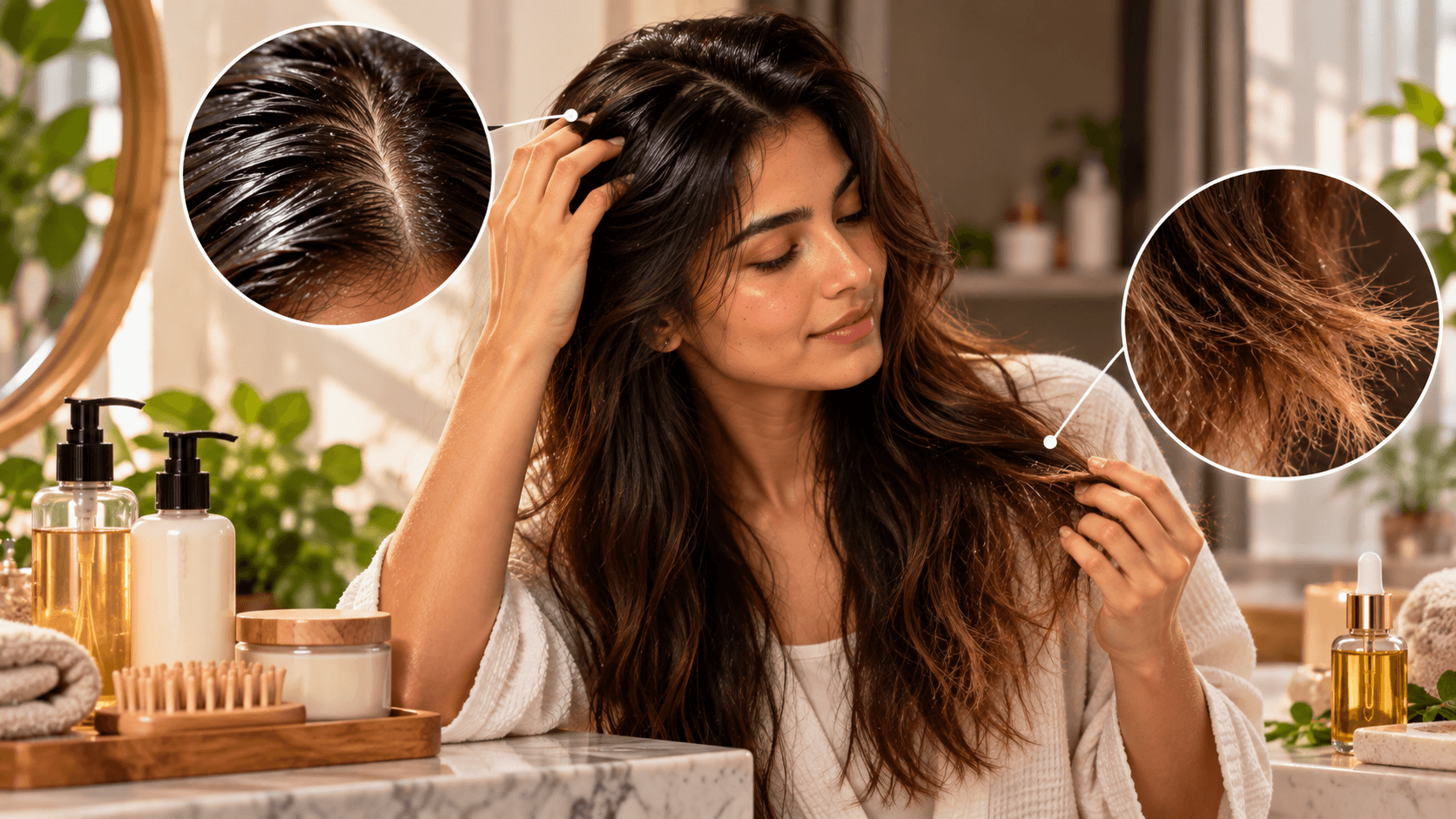
An oily scalp with dry ends happens because scalp oil (sebum) doesn't travel evenly down long or damaged hair, leaving roots oily while ends are under-moisturized. The fix isn't choosing one product for the whole head — it's treating the scalp and lengths differently within the same routine.
Why This Combination Happens
Sebum naturally coats hair starting from the scalp, but the longer the hair (or the more damaged/porous the strands), the less oil actually reaches the ends before it's washed away or absorbed along the way. This is especially common with longer hairstyles, frequent heat styling, or chemically treated hair, where ends are both furthest from the oil source and most damaged.
Scalp-Specific Care
● Use a clarifying or balancing shampoo focused on the roots — concentrate cleansing product at the scalp rather than dragging it through the full length.
● Avoid over-washing, which can trigger the scalp to overcompensate with even more oil production — find a washing frequency that keeps oil manageable without stripping completely.
● Consider a lightweight scalp scrub or exfoliant occasionally to prevent product buildup at the roots without affecting the ends.
Ends-Specific Care
● Apply conditioner primarily from mid-length to ends, avoiding the scalp where it can contribute to oiliness.
● Use a leave-in conditioner or hair oil on damp ends after washing — this is where the driest part of your hair benefits most from added moisture.
● Get regular trims to remove split, over-dried ends, which won't improve with product alone once significantly damaged.
A Simple Wash-Day Routine
Step | Where to Focus | What to Use |
Shampoo | Scalp and roots | Balancing/clarifying formula, massaged into scalp |
Conditioner | Mid-length to ends only | Rich, moisturizing formula, avoiding roots |
Leave-in/oil | Ends only, on damp hair | Lightweight leave-in or a few drops of hair oil |
FAQ
Q: Should I use two different shampoos for my scalp and ends?
A: Not necessarily two shampoos, but applying shampoo primarily to the scalp and letting the rinse-off suds cover the lengths (rather than piling more product onto already-dry ends) achieves a similar balance.
Q: Will washing my hair less often fix an oily scalp?
A: Not always — for some people, under-washing causes the scalp to overproduce oil even faster; finding the right frequency (rather than simply washing less) is the more reliable fix.
Q: Can I apply oil to my scalp if it's already oily?
A: Generally it's better to reserve oil application for the ends specifically if your scalp is already oil-prone, to avoid adding to the existing oiliness at the roots.
Q: Is oily scalp with dry ends more common with long hair?
A: Yes — the longer the hair, the further natural oil has to travel from the scalp, which is why this combination is especially common with longer lengths.
Comments
Be the first to comment.