
Eclat by NRJ
New
Blog · Beauty Tips
Natural vs. Chemical Hair Treatments: How to Decide
By Eclat Team · 6 October 2026
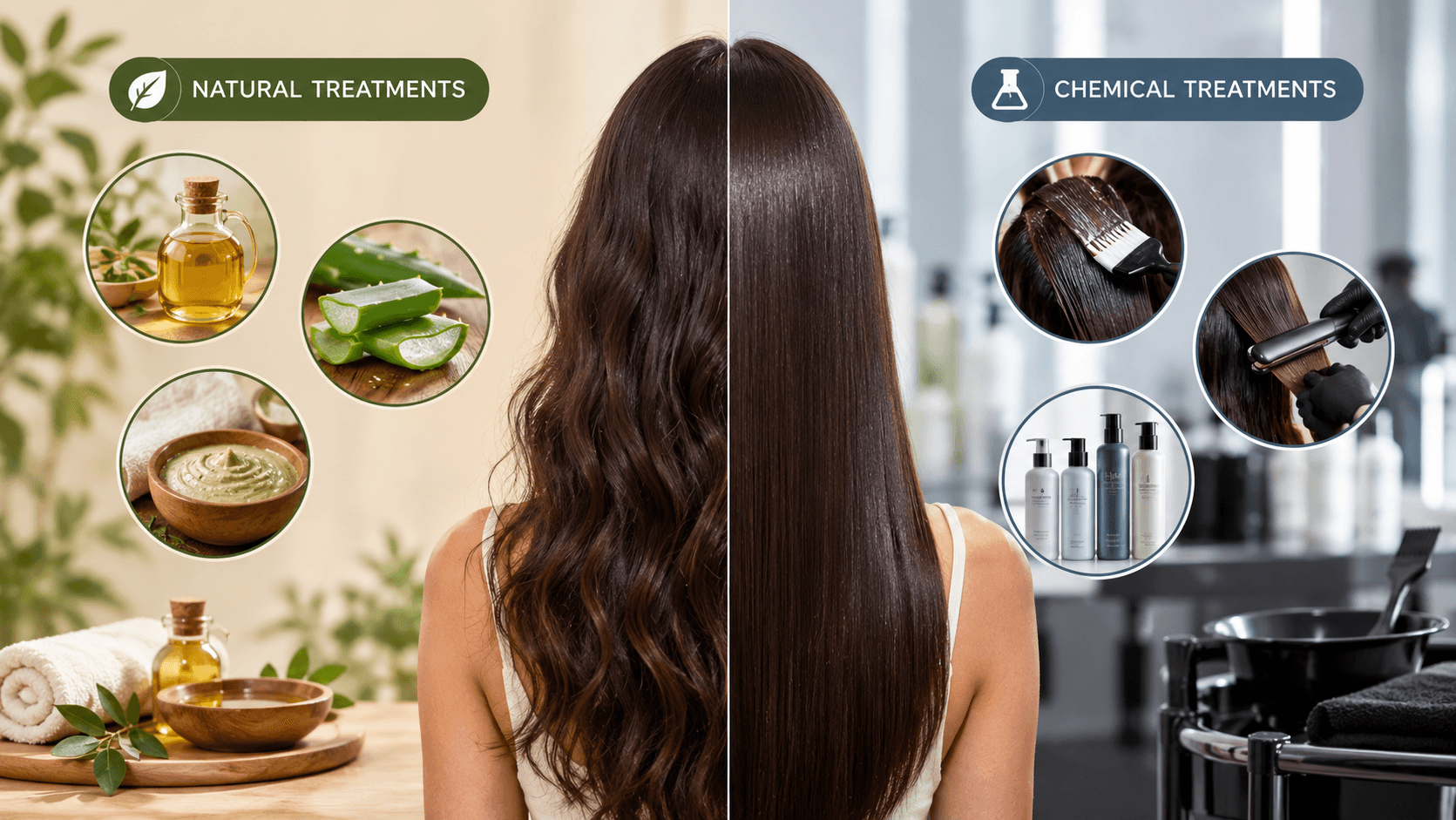
Natural treatments — oils, home remedies, gentle actives — work best for maintenance and mild concerns, while chemical treatments like keratin smoothing or targeted actives are better suited to specific, stubborn problems such as severe frizz or chemical damage. The right choice depends on how severe the issue actually is, not which option sounds safer.
What Natural Treatments Can (and Can't) Fix
Oiling, aloe vera, and similar remedies are genuinely effective for scalp nourishment, mild dryness, and general maintenance — used consistently, they support healthier hair over time. What they can't do is reverse significant structural damage (heat damage, over-bleaching) or control severe frizz in high humidity the way a targeted chemical treatment can.
What Chemical Treatments Are Actually For
Keratin treatments, chemical straightening, and targeted bonding treatments work by altering hair's protein structure directly — which is why they can solve problems natural remedies physically can't reach. The trade-off is that they involve real chemical processing, require specific aftercare, and aren't something to repeat too frequently without risking damage themselves.
Risk/Reward Comparison
| Natural Treatments | Chemical Treatments |
Best for | Maintenance, mild dryness, scalp health | Severe frizz, structural damage, specific concerns |
Speed of results | Gradual, with consistent use | Immediate, dramatic |
Risk level | Low | Moderate — depends on treatment and frequency |
Frequency | Can be used regularly | Spaced out, typically months apart |
A Simple Way to Decide
If the concern is ongoing maintenance or mild (occasional dryness, general shine), start natural and stay consistent for a few weeks before considering anything stronger. If the concern is severe and specific (unmanageable frizz, damage from over-processing), a natural remedy alone is unlikely to be enough — that's when a chemical treatment, done professionally, is worth considering.
FAQ
Q: Can I use natural oils after a chemical treatment?
A: Generally yes, and it's often recommended for aftercare — but check the specific treatment's guidelines, as some chemical processes need a few days before introducing oils.
Q: Are chemical hair treatments safe for regular use?
A: They're designed to be spaced out — most chemical treatments shouldn't be repeated more than every 3-4 months, as more frequent use increases damage risk.
Comments
Be the first to comment.