
Eclat by NRJ
New
Kundan vs Polki vs Jadau: What’s the Difference and Which Should You Buy?
By Eclat Team · 21 November 2026
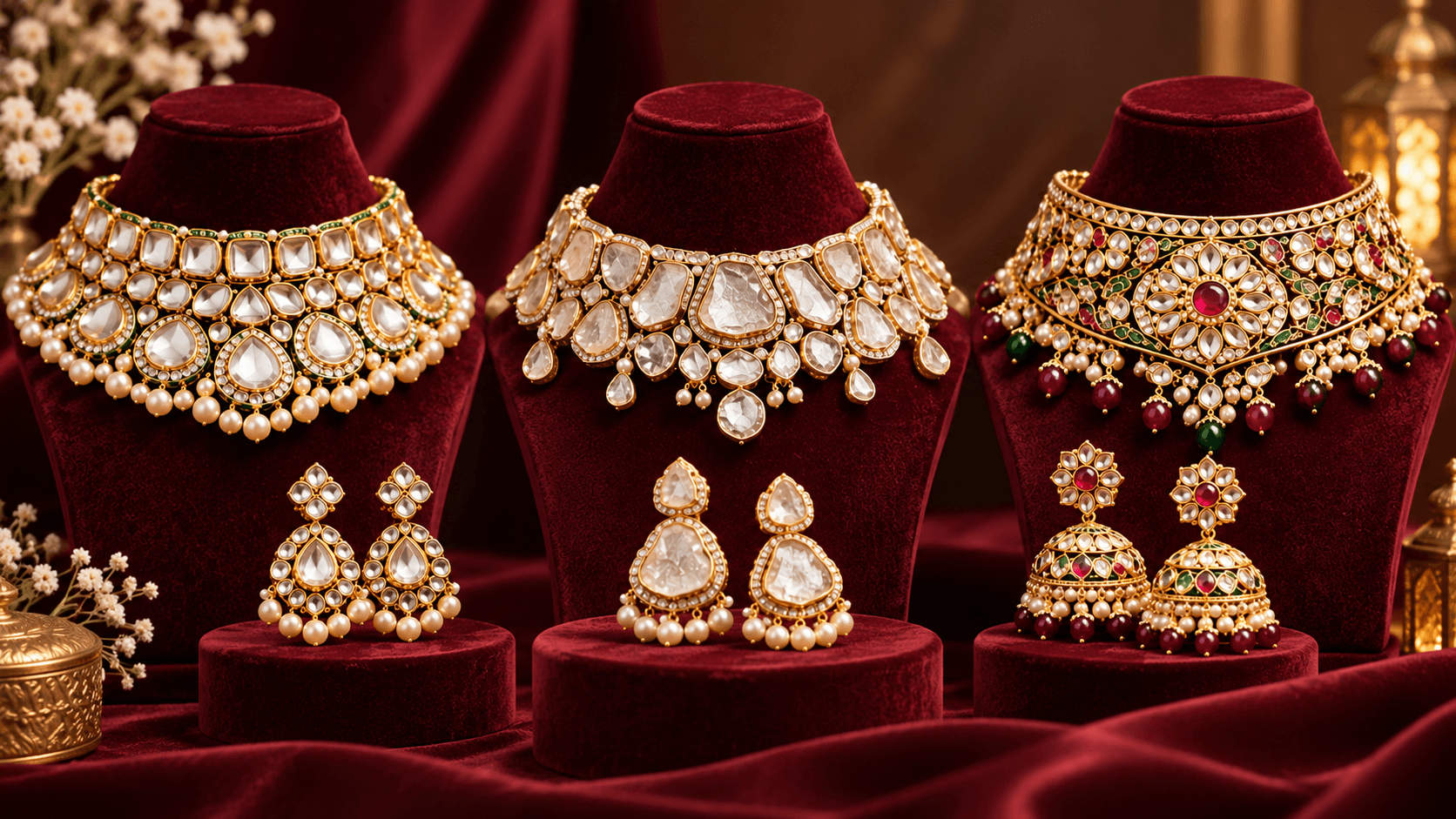
Quick answer: Polki is a type of stone, kundan is a way of setting stones, and jadau is the craft that holds it all together. Polki means uncut, unpolished diamonds (or uncut-look stones in imitation jewellery). Kundan sets polished or glass stones in layers of fine gold foil. Jadau is the traditional technique of embedding stones into gold without glue — the method behind both styles.
These three words get used interchangeably in shops and on product pages, which is why so many buyers are unsure what they’re actually paying for. Once you know which word describes the stone, which describes the setting and which describes the craft, every jewellery listing becomes easier to read.
What Is Kundan Jewellery?
Kundan is one of India’s oldest stone-setting techniques, refined in the royal courts of Rajasthan and Gujarat. The name comes from the highly refined gold foil (kundan) that artisans press around each stone to hold it in place. The stones themselves are usually flat-backed—glass, semi-precious stones or polished gems—which gives kundan its bright, mirror-like shine.
Turn a traditional kundan piece over and you will often find meenakari, coloured enamel work painted on the reverse. It isn’t part of the kundan technique itself, but the two are so often paired that many people assume they are the same thing.
What Is Polki?
Polki refers to diamonds in their natural, uncut form — not faceted or polished the way a modern solitaire is. Because the surface is left raw, polki has a soft, glassy glow instead of sparkle. It is one of the oldest forms of diamond jewellery in India and is still the signature of heirloom bridal sets.
Real polki is expensive because it uses natural diamonds. In imitation jewellery, “polki” describes the look: uncut-style glass or synthetic stones with a foil backing that recreate the same muted, antique finish at a fraction of the cost.
What Is Jadau?
Jadau (also written jadtar) is the craft rather than a stone or a finish. Traditional jadau artisans heat gold until it softens, then press stones directly into it without adhesive; as the metal cools, it grips each stone. Both kundan and polki jewellery are traditionally made using jadau work, which is why the three terms overlap so much.
In imitation jewellery, “jadau-style” usually means stones embedded closely into an ornate, gold-plated alloy frame, often with a lac or resin backing. It is the look of jadau, made with modern methods — worth knowing so you compare like with like. Why hand-finishing still matters is covered in Handcrafted vs Mass-Produced Jewellery.
Kundan vs Polki vs Jadau: Side-by-Side
Feature | Kundan | Polki | Jadau |
What it is | A stone-setting technique | A type of stone (uncut diamond) | A craft / embedding method |
Stone used | Polished glass, gems or semi-precious stones | Uncut diamonds (uncut-look stones in imitation) | Any — kundan stones, polki, gems |
Finish | Bright, reflective, uniform | Soft, muted, antique glow | Ornate, densely set |
Traditional base | Gold foil on gold | Gold foil backing | Softened gold, no glue |
In imitation jewellery | Glass stones, foil, gold-plated alloy | Uncut-style glass/synthetic stones | Stones set into plated alloy, lac backing |
Best for | Festive, sangeet, reception | Bridal, heirloom-inspired looks | Statement bridal and heritage pieces |
How to Tell Them Apart in a Product Photo
• Look at the sparkle. Mirror-bright, even shine points to kundan; a cloudy, glass-like glow with irregular shapes points to polki-style stones.
• Look at the stone shapes. Kundan stones tend to be neatly cut and symmetrical. Polki stones vary in shape and thickness because they imitate natural, uncut diamonds.
• Check the back. Coloured enamel on the reverse is meenakari, common on kundan pieces. Product pages should show a back view — if a brand doesn’t, ask.
• Read the materials line. A good listing names the base metal, plating and stone type. Vague words like “royal” or “premium” tell you nothing about construction. Our guide to Gold-Plated vs Gold-Toned vs Real Gold explains the metal terms.
Which Should You Choose?
If you want… | Choose | Why |
A bright, festive look that photographs well | Kundan | Reflects light evenly; works in daylight and under stage lights |
A vintage, regal bridal look | Polki-style | The muted glow reads as heirloom rather than trendy |
One maximal statement piece | Jadau-style | Dense stone work gives the most visual weight |
Pieces you can re-wear across functions | Kundan earrings + polki-style necklace | The two styles pair well without competing |
The verdict: Choose kundan if you want shine and colour, polki-style if you want an understated heirloom feel, and jadau-style if you want one piece to carry the whole outfit. Mixing kundan and polki in the same look is completely acceptable — many traditional bridal sets do exactly that.
Caring for Kundan and Polki-Style Pieces
Both styles rely on foil and backing that don’t like water. Keep them dry, clean with a soft brush, and store them flat and separately. Our full guide on How to Clean and Store Imitation Jewellery So It Doesn’t Tarnish [EDITOR: target goes live 2026-12-10 — add this link on that date] covers each jewellery type step by step.
Browse our kundan jewellery and polki-style jewellery collections — every product page lists the base metal, plating and stone type so you know exactly what you’re buying.
Related Reading
• Is Imitation Jewellery Safe for Sensitive Skin?
• How to Choose Earrings for Your Face Shape
• Raksha Bandhan & Festive Jewellery Styling Guide
Frequently Asked Questions
Is kundan jewellery real gold?
Traditional kundan uses refined gold foil set on a gold base. Imitation kundan recreates the look with glass stones and a gold-plated alloy base. The product description should state which one you are buying.
Is polki more expensive than kundan?
In fine jewellery, usually yes, because polki uses natural uncut diamonds. In imitation jewellery, price depends more on craftsmanship, stone quality and plating than on the style name.
Can I wear kundan and polki together?
Yes. Kundan and polki are often combined in the same bridal set, and pairing kundan earrings with a polki-style necklace is a common way to add contrast.
Is meenakari the same as kundan?
No. Meenakari is colored enamel work, often painted on the back of kundan pieces. Kundan is the stone-setting technique on the front.
Comments
Be the first to comment.