
Eclat by NRJ
New
Blog · Beauty Tips
Chapped Lips in Winter: Causes, Fixes & What to Avoid
By Eclat Team · 26 November 2026
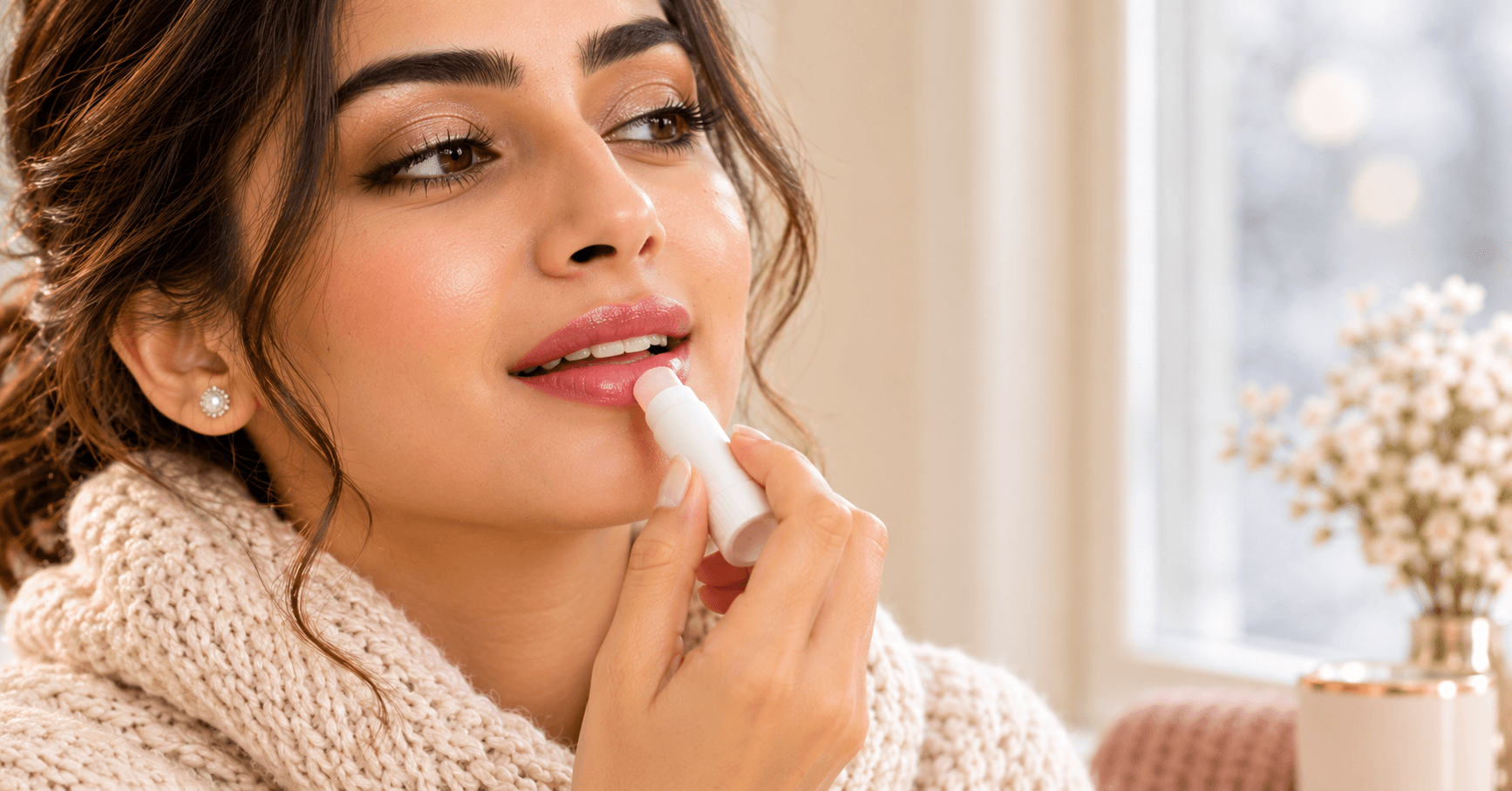
Quick answer: To heal chapped lips, stop licking them, apply a thick layer of a fragrance-free balm with an occlusive ingredient like petrolatum, beeswax or shea butter several times a day and before bed, and use a lip balm with SPF outdoors. Most mildly chapped lips improve within a few days to a week with consistent care.
Why Lips Chap So Easily in Winter
The skin on your lips is thin and has no oil glands of its own, so it relies on you to keep it moisturised. Cold, dry air and indoor heating pull moisture out quickly. Licking your lips makes it worse: saliva evaporates fast, taking moisture with it, and its enzymes irritate the skin.
Common Causes
• Dry air from cold weather and heaters
• Licking, biting or peeling your lips
• Breathing through your mouth, especially while sleeping
• Irritating ingredients in some balms and lipsticks — strong flavours, fragrance, menthol or camphor
• Long-wear matte lipsticks, which can be drying
• Sun and wind exposure
What Actually Helps
Ingredient | What it does |
Petrolatum (petroleum jelly) | Seals in moisture — one of the most effective occlusives |
Beeswax | Forms a protective layer |
Shea butter | Softens and protects |
Ceramides | Support the skin barrier |
Lanolin | Moisturises — skip if you’re sensitive to it |
SPF (zinc oxide, titanium dioxide) | Protects lips from sun damage outdoors |
Reading ingredient lists is easier once you know the vocabulary — see What Is a Biome Blend? Decoding Skincare Labels.
A Simple Lip Repair Routine
1. Morning: balm with SPF before going out.
2. Through the day: reapply plain balm after eating and drinking.
3. Under lipstick: a thin layer of balm first, blotted, especially under matte formulas.
4. Night: a thick layer of an occlusive balm or petroleum jelly as a lip mask.
Habits That Make Chapped Lips Worse
• Peeling flakes. It opens small cracks and slows healing.
• Scrubbing cracked lips. Gentle exfoliation is only for flaky, unbroken skin — never for cracks.
• Flavoured or tingling balms. The tingle is usually an irritant, not a sign it’s working.
• Licking lips “to moisten” them. It dries them out faster.
Eclat tip: Keep a balm wherever you spend time — your bag, desk and bedside. Consistency matters more than which balm you use.
When to See a Doctor
See a doctor or dermatologist if your lips are severely cracked or bleeding, you have persistent cracks at the corners of your mouth, there is swelling or crusting, or your lips haven’t improved after two to three weeks of care. These can point to an allergy, infection or other condition.
Lips are only one part of winter care. See Winter Skincare Routine for Indian Skin for the full routine.
Related Reading
• How to Build a Minimalist Skincare Routine
• Is Your Sunscreen Actually Reapplication-Proof?
• The Right Order to Apply Skincare Products (AM & PM)
Frequently Asked Questions
How can I heal chapped lips overnight?
Apply a thick layer of petroleum jelly or an occlusive balm before bed. Lips won’t fully heal overnight, but they’ll be noticeably softer by morning.
Is petroleum jelly good for chapped lips?
Yes. It is one of the most effective ingredients for sealing in moisture and protecting lips while they heal.
Should I exfoliate chapped lips?
Only if lips are flaky but not cracked, and gently. Exfoliating cracked or sore lips slows healing.
Do I need SPF on my lips in winter?
Yes. Lips can still burn and darken from sun exposure in winter, so use a lip balm with SPF when you’re outdoors.
Comments
Be the first to comment.