
Eclat by NRJ
New
Blog · Beauty Tips
Frizzy Hair in Humidity: A Complete Fix Guide
By Eclat Team · 28 September 2026
Frizzy Hair in Humidity: A Complete Fix Guide
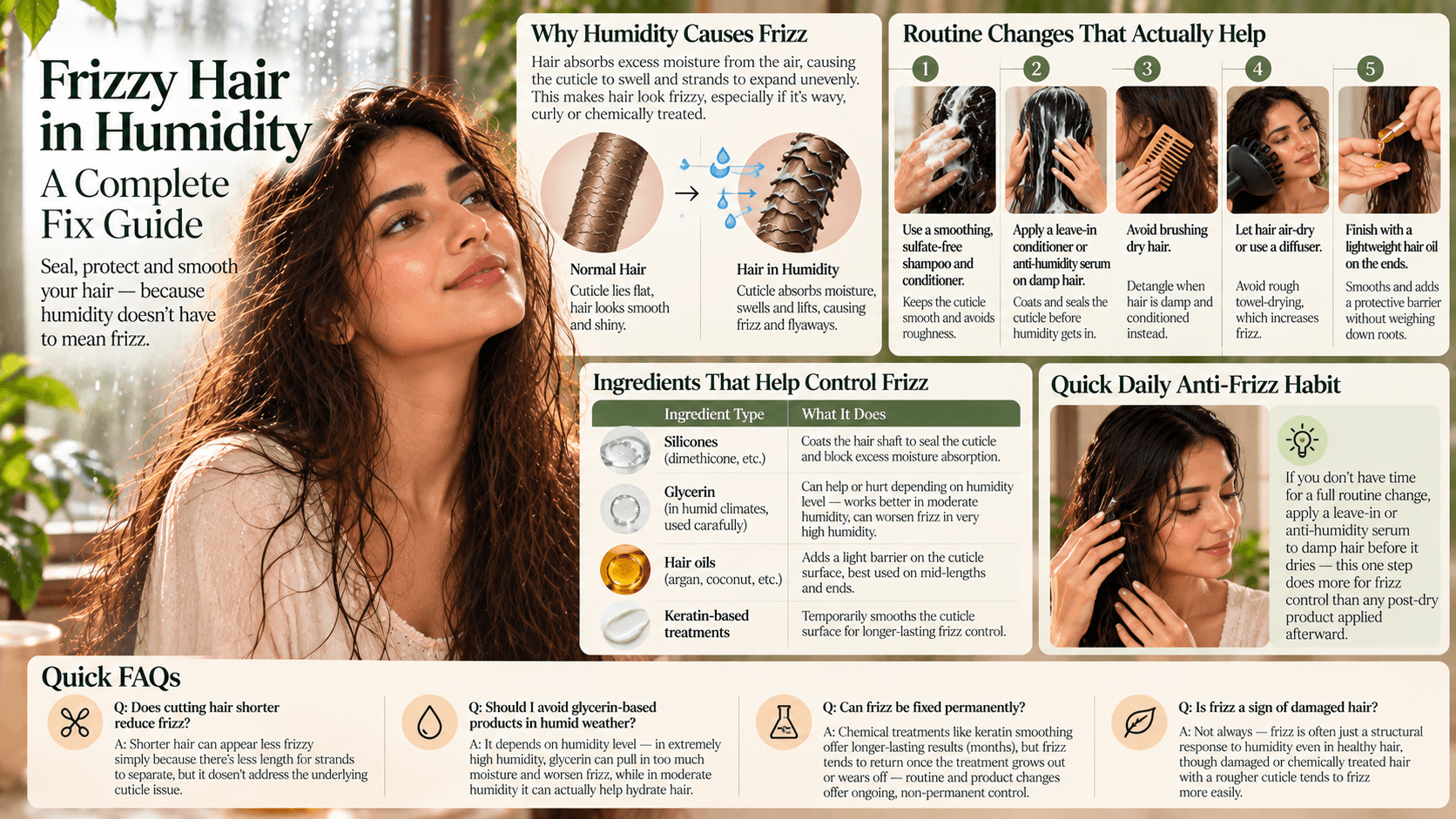
Humidity causes frizz because hair absorbs excess moisture from the air, swelling the outer hair cuticle and causing strands to expand unevenly — the fix is sealing the cuticle with the right products and technique, not avoiding moisture altogether, which isn't possible in humid climates.
Why Humidity Specifically Causes Frizz
Hair is naturally porous, and when the cuticle (the hair's outer protective layer) is raised or damaged, it absorbs ambient moisture unevenly. This causes strands to swell and separate from each other rather than lying smooth, which reads visually as frizz — it's especially pronounced in wavy, curly, or chemically treated hair, where the cuticle tends to sit more raised to begin with.
Routine Changes That Actually Help
● Use a smoothing, sulfate-free shampoo and conditioner rather than clarifying formulas, which can leave the cuticle rougher.
● Apply a leave-in conditioner or anti-humidity serum on damp hair — this is the single most effective step, since it coats and seals the cuticle before humidity gets a chance to penetrate it.
● Avoid brushing dry hair with a fine-tooth brush, which disrupts the cuticle further — detangle when hair is damp and conditioned instead.
● Let hair air-dry or use a diffuser rather than rough towel-drying, which roughens the cuticle and increases frizz.
● Finish with a small amount of lightweight hair oil on the ends only, to smooth and add a protective barrier without weighing hair down at the roots.
Ingredients That Help Control Frizz
Ingredient Type | What It Does |
Silicones (dimethicone, etc.) | Coats the hair shaft to seal the cuticle and block excess moisture absorption |
Glycerin (in humid climates, used carefully) | Can help or hurt depending on humidity level — works better in moderate humidity, can worsen frizz in very high humidity |
Hair oils (argan, coconut, etc.) | Adds a light barrier on the cuticle surface, best used on mid-lengths and ends |
Keratin-based treatments | Temporarily smooths the cuticle surface for longer-lasting frizz control |
A Quick Daily Anti-Frizz Habit
If you don't have time for a full routine change, the single highest-impact habit is applying a leave-in or anti-humidity serum to damp hair before it dries — this one step does more for frizz control than any post-dry product applied afterward.
FAQ
Q: Does cutting hair shorter reduce frizz?
A: Shorter hair can appear less frizzy simply because there's less length for strands to separate visibly, but it doesn't address the underlying cuticle issue causing the frizz.
Q: Should I avoid glycerin-based products in humid weather?
A: It depends on humidity level — in extremely high humidity, glycerin can pull in too much moisture and worsen frizz, while in moderate humidity it can actually help hydrate hair. If you notice more frizz after using a glycerin product on very humid days, switch to a silicone-based option instead.
Q: Can frizz be fixed permanently?
A: Chemical treatments like keratin smoothing offer longer-lasting results (months), but frizz tends to return once the treatment grows out or wears off — routine and product changes offer ongoing, non-permanent control.
Q: Is frizz a sign of damaged hair?
A: Not always — frizz is often just a structural response to humidity even in healthy hair, though damaged or chemically treated hair with a rougher cuticle tends to frizz more easily.
Comments
Be the first to comment.